Pool Sanitizers

 
Filter

Filters

Subcategory

    Reset

    Pool Chlorine & Pool Sanitizer

    Pool sanitizer and chlorine for pools are vital to keeping your pool clean and healthy. HTH™ pool sanitizer products are a safe and effective way to keep your pool clean by killing harmful bacteria and preventing algae growth. Our sanitizers are designed to optimize pool maintenance and keep your pool looking its best.

    Pool sanitizers and chlorine for pools are necessary to ensure your pool is clean and safe. Our HTH pool sanitizer products are specially formulated to kill bacteria and prevent algae growth. They are also easy to use, making them ideal for anyone looking to keep their pool in top condition. So, why choose HTH products over our competitors?

    At HTH, we strive to provide the best quality pool sanitizers and pool chlorine to keep your pool clean and healthy. Our sanitizers are specifically formulated for superior performance and are easy to apply. We also offer a great selection of pool sanitizer products, allowing you to choose the one that best fits your needs.

    HTH pool sanitizer and chlorine for pools are perfect for keeping your pool water clean and free from bacteria and algae. We offer a range of convenient, easy-to-use sanitizing solutions to keep your pool sparkling clean. HTH products are designed to be effective, reliable, and long-lasting so that you can enjoy a crystal-clear swimming experience all year round.

    With our HTH pool sanitizer chemicals, you don't have to worry about harmful microbes that may lurk in your pool waters. And with regular application of our pool chlorine liquid or tablets, you'll ensure optimal protection against any dangerous pathogens that could lead to health risks for swimmers or cause damage to the quality of the water itself.

    If you're ready to try HTH's pool chlorine products for yourself, find these products at a store near you by checking our list of verified HTH retailers today! Browse our HTH product collections and get everything you need for an enjoyable summer season today!

    HTH 3 inch chlorine tablets in buckets displayed poolside for swimming pool sanitation

    Pool Sanitizers
    Frequently Asked Questions

    • What is the best pool sanitizer?

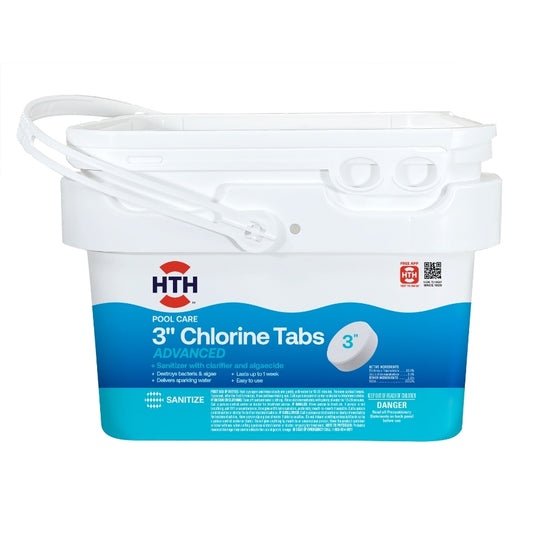
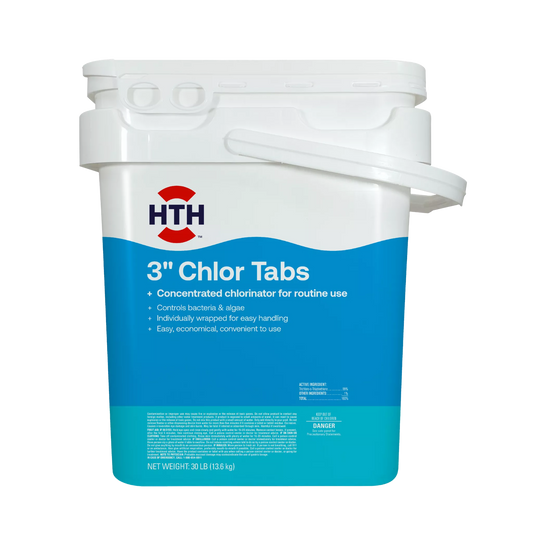
      Trichlor chlorine tablets (1-inch or 3-inch) are the most popular choice for ongoing pool sanitation because they dissolve slowly and are easy to use in a floater or feeder. Cal hypo tablets or liquid chlorine are better when CYA levels are already high. Your best option depends on your pool type, size, and existing water chemistry.

    • What chlorine level should I maintain in my pool?

      Maintain free chlorine between 1–4 ppm at all times. Below 1 ppm, the pool is unsafe for swimming. Above 4 ppm, wait to swim until free chlorine returns to 1–4 ppm. Saltwater pools with chlorine generators should also maintain 1–4 ppm free chlorine.

    • Can I use chlorine tablets in a saltwater pool?

      You can, but saltwater pools already produce chlorine through the generator. Adding trichlor tablets on top will steadily raise CYA levels, which can eventually cause chlorine lock. If you supplement a saltwater pool with tablets, use cal hypo tablets, which do not contain CYA, instead.

    • How do I maintain chlorine levels in a pool during a heat wave?

      High temperatures can accelerate chlorine loss and promote algae growth, while strong UV exposure further depletes chlorine. During heat waves, test daily, increase the tablet count in your feeder or floater, ensure CYA is at 20–50 ppm to protect chlorine from UV, shock twice a week instead of once, and run the pump 10–12 hours per day. Heat waves are a common trigger for green pool outbreaks.

    • What happens if I add too much chlorine to my pool?

      Too much chlorine can cause skin and eye irritation, fade swimwear, and damage pool equipment. If free chlorine is above 4 ppm, do not swim until it returns to 1–4 ppm. Stop adding chlorine, remove the floater or feeder, and allow sunlight and natural consumption to bring levels down. Test before re-entry.

    • Is it safe to swim in a pool that was just shocked or had chlorine added?

      Wait until free chlorine drops to 1–4 ppm after any chlorine addition before swimming. After a shock treatment, this typically takes 8–24 hours. After adding routine maintenance chlorine, wait at least 15–30 minutes and verify the level with a test strip. Never swim when free chlorine is above 4 ppm.

    • What is the difference between trichlor, dichlor, and cal hypo chlorine products?

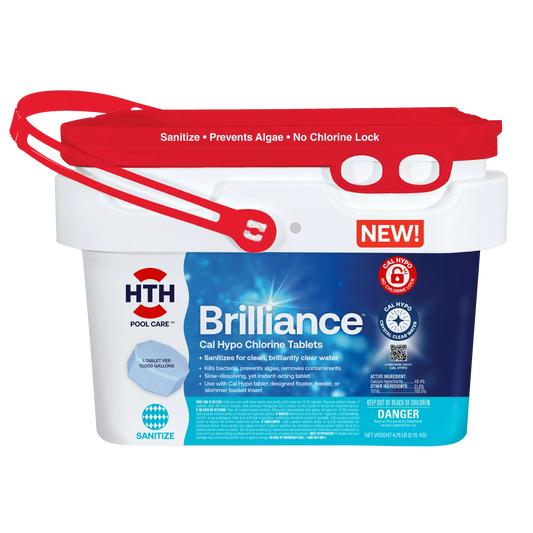
      Trichlor, used in most 3-inch tablets, dissolves slowly, contains CYA, and is highly concentrated—ideal for ongoing maintenance. Dichlor, used in some granular products, dissolves quickly, also contains CYA, and is used for fast chlorine boosts. Cal hypo, used in HTH shock products and HTH Brilliance tablets, contains no CYA, provides strong, fast-acting chlorination, and is best when CYA levels are already elevated.

    • How do I sanitize an above-ground pool with HTH chlorine products?

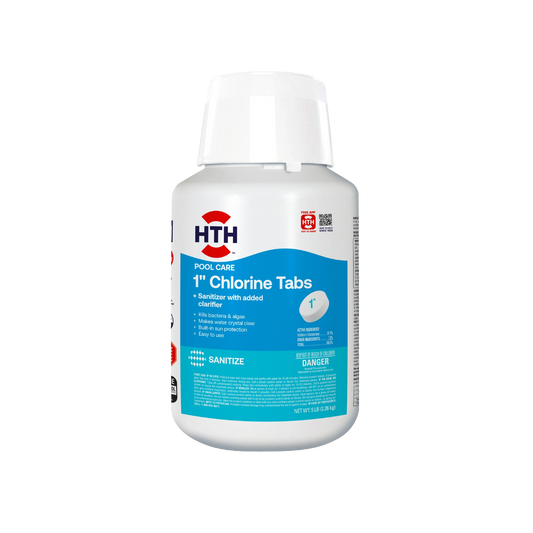
      Use 1-inch chlorine tablets in a floating dispenser sized for your pool volume—never place tablets directly on the liner. Start with 1–2 tablets per 5,000 gallons weekly and adjust based on test results. Shock weekly or after heavy use. Since above-ground pools have smaller volumes and vinyl liners, precise dosing is especially important.

    • Can pool chlorine tablets be used in a hot tub?

      No. HTH 1" and 3" trichlor pool chlorine tablets are made for swimming pools, not hot tubs or spas. For hot tub sanitation, choose an HTH spa product such as HTH spa Bromine Tablets or HTH spa Clear Chlorinating Sanitizer, then test and maintain the level listed on the product label.

    • Do chlorine tablets go bad?

      Yes—chlorine tablets can lose effectiveness when storage exposes them to moisture, heat, or contamination. Keep HTH pool chlorine tablets dry in their original, tightly closed container in a cool, well-ventilated area away from heat or flame. Do not use tablets that became wet or contacted another pool chemical before use. Check the product label and replace any container whose condition or storage history is uncertain.